Index Funds: What You Are Actually Buying
An index fund is a rule, not a stock pick: hold everything in a defined list, in proportion to its size, and charge as little as possible for doing it. This guide covers how an index is constructed, the difference between an index and a fund that tracks it, what the alternatives are, and how to read a fund fact sheet in about five minutes.
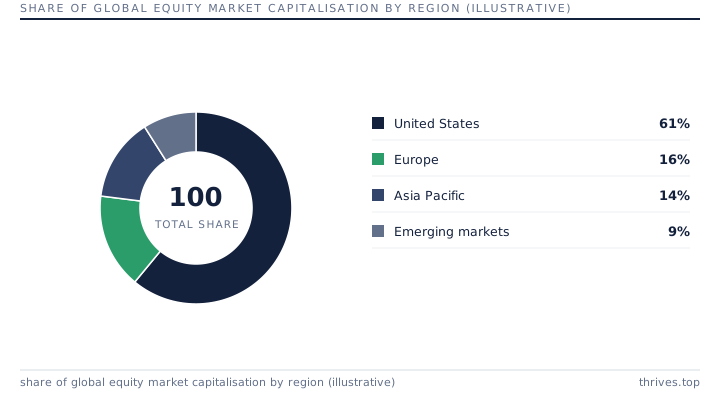
An index is a rule, and the rule decides the returns
An index is a published list plus a weighting method. Some indices weight by company size, so the largest companies dominate. Others weight every company equally, or screen first and then weight, excluding sectors or countries according to a written rule. Two funds can both call themselves total-market and hold visibly different portfolios.
Because the rule determines what you own, reading the rule matters more than reading the past performance chart. A fund with an excellent ten-year record in a size-weighted index mostly reflects the fact that large companies did well in that decade, not that the manager is skilled.
The fund is not the index
An index cannot be bought. What you buy is a fund that attempts to replicate it, and the difference between the index return and the fund return is tracking difference. Two components drive it: the expense ratio, which is published and predictable, and sampling, cash drag, taxes and rebalancing costs, which are not.
For a broad equity index fund, a tracking difference of 0.10 to 0.30 percentage points a year is normal and mostly explained by the expense ratio. When the difference is much larger than the fee, look for a reason: a small fund size, wide bid-ask spreads, or a sampling strategy that skips smaller holdings.
Accumulating versus distributing
In many markets outside the United States, funds come in two versions. A distributing fund pays dividends out to you as cash, which you must reinvest manually and often pay tax on. An accumulating fund reinvests dividends inside the fund, so the share price reflects the growth and you are not handling cash. Which is better depends entirely on your tax rules, not on the fund.
Check which one you are buying before you compare prices. An accumulating share class and a distributing class of the same fund are not comparable by price, and a novice comparison of the two numbers usually looks alarming for no reason.
Reading a fact sheet in five minutes
Four numbers answer most questions. The ongoing charge, which is what you pay each year. The fund size, because very small funds close and very large ones can face capacity limits in narrow markets. The tracking difference over three and five years against the index, not against a peer group. And the number of holdings, which tells you whether the fund is truly diversified or holds a sample.
Ignore the star rating, the manager photo and the one-year chart. A one-year chart on a broad index mostly tells you which way the market moved, which you already knew.
What to take away
- Read the index rule, not just the fund name; the rule determines what you own.
- Tracking difference minus expense ratio is the number that reveals a replication problem.
- Accumulating and distributing share classes are not comparable by price alone.
- Check ongoing charge, fund size, tracking difference and holdings count; ignore star ratings.
Try your own numbers
| Year | Balance | Paid in |
|---|---|---|
| 5 | — | — |
| 10 | — | — |
| 15 | — | — |
| 20 | — | — |
| 25 | — | — |
| 30 | — | — |
Related entries
Disclaimer: This guide is educational information about investing, not investment advice, and it does not recommend any specific fund or product. Past returns do not predict future returns; the value of investments can fall as well as rise.