Your First Zero-Based Budget: A Four-Session Method
Zero-based budgeting means every unit of currency gets a job before the month starts, including the units you send to savings. Done in one sitting it fails, because the first attempt always ends with an unassigned remainder and no idea whether it is realistic. This guide splits the work into four short sessions across two weeks, with the specific decision to make in each one.
Session one: collect the fixed floor
Spend thirty minutes listing only the costs that occur whether or not you do anything: rent or mortgage, loan payments, insurance, utilities, phone, subscriptions, childcare, minimum debt payments. Do not estimate. Read the actual amounts off last month's statements. Write the total at the top of a page and put the page away.
This number is your fixed floor. Most households find it is higher than they guessed, and that discovery is the reason to do this session first: every later decision is easier once you know how much of the month was never actually available to choose.
Session two: give the variable lines a number
Now take the categories that move: groceries, fuel and transit, dining, household supplies, personal care, kids, entertainment. Assign each a monthly number based on the last three months divided by three, minus ten percent. The subtraction is deliberate. A first-month budget that matches your current spending exactly leaves no room to absorb a surprise, and the first surprise is what usually breaks the system.
Assign in order of necessity and stop when the money runs out. If you get to dining and there is nothing left, the budget has just done its job: it told you the truth in a spreadsheet instead of at the end of the month.
Session three: assign the remainder out loud
With the fixed floor and the variable lines assigned, whatever remains is the interesting part. Assign it in this order: minimum debt payments are already in the floor, so next comes the emergency fund top-up, then extra debt payments, then sinking funds for annual bills, then investing, then everything else.
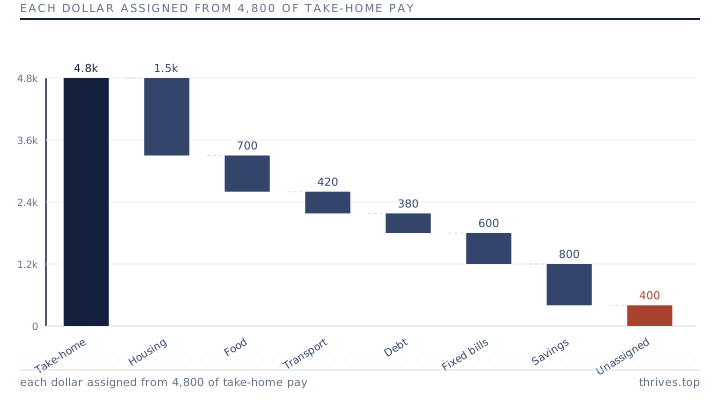
The rule of zero-based budgeting is that the remainder must end at exactly zero. If you have 400 unassigned, you have not finished; you have 400 you are about to spend by accident. Give it to savings, to extra debt principal, or to a specific named category such as a holiday fund.
Session four: run the two-week review
Two weeks in, compare what you assigned against what you actually spent. Expect two or three lines to be wrong by more than twenty percent. Do not rebuild the budget; adjust only those lines, and take the difference from the line you would have spent it on anyway. A budget that is adjusted twice a month survives; a budget that is rebuilt from scratch every month gets abandoned by month three.
Keep the review to fifteen minutes with a fixed date. Households that review on the same day each pay period stay with the system; households that review whenever they remember usually stop within two months.
What to take away
- Collect the fixed floor from actual statements before estimating anything.
- Start variable lines ten percent below your current average so the first surprise does not break the system.
- Assign the remainder to zero, in the order emergency fund, extra debt, sinking funds, investing.
- Adjust two or three lines at the two-week review instead of rebuilding the budget.
Try your own numbers
| Expense categories | Amount |
|---|---|
| Housing | 0 |
| Utilities | 0 |
| Groceries | 0 |
| Transport | 0 |
| Insurance | 0 |
| Debt minimums | 0 |
| Emergency fund | 0 |
| Sinking funds | 0 |
Disclaimer: This guide is educational information about personal money management, not financial advice. Amounts in the example are illustrative.