Compound Interest: Definition, Formula and a Worked Example
Compound interest is interest that is calculated on both the original amount and on interest already earned. That single change is why the growth curve bends upward instead of running in a straight line, and why time in the market matters more than the amount of money you start with.
Compound Interest. Compound interest is the interest earned on a principal amount plus the interest that has already been added to it. Each period, the interest is calculated on a larger base than the period before, so the growth accelerates rather than staying constant.
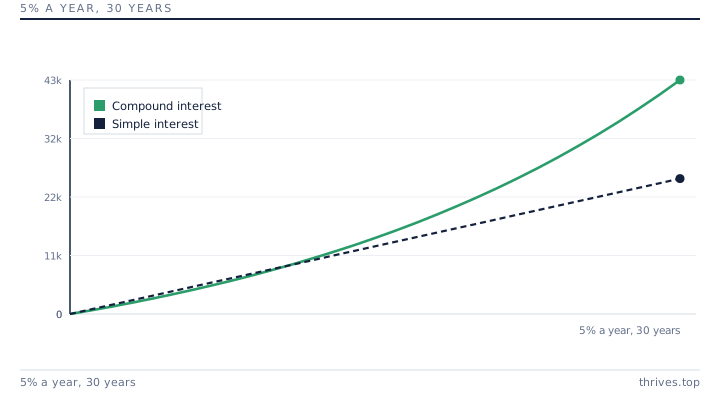
Worked numbers
You invest 10,000 at 5 percent a year, compounded annually, and add nothing. Simple interest pays 500 every year, so after 30 years you have 25,000. Compound interest pays 500 in year one, 525 in year two, and 2,058 in year thirty, ending at 43,219. The extra 18,219 is interest earned on interest — and note that more than half of it arrived in the final ten years.
The formula in plain terms
Future value equals the principal multiplied by one plus the rate, raised to the power of the number of periods. The exponent is where the action is: doubling the number of periods roughly quadruples the effect, while doubling the rate roughly doubles it. This is why starting ten years earlier usually beats contributing twice as much for half as long.
The same mechanism runs in reverse on debt. A credit card balance at 22 percent compounds against you at the same rate, which is why a balance left alone grows faster than most people expect and why paying it down early produces a guaranteed return equal to the rate.
What breaks the curve
Fees, taxes and inflation each subtract from the compounding base rather than from the final total, so their effect also compounds. An annual fee of one percent on a portfolio does not reduce the outcome by one percent; over thirty years it reduces it by roughly a fifth, because the fee is charged on a balance that would otherwise have grown.
Withdrawals compound in the same direction. Taking a fixed amount out in a falling market removes assets that would have participated in the recovery, which is why the order of returns matters so much once you are spending rather than accumulating.
Try your own numbers
| Year | Balance | Paid in |
|---|---|---|
| 5 | — | — |
| 10 | — | — |
| 15 | — | — |
| 20 | — | — |
| 25 | — | — |
| 30 | — | — |
Disclaimer: This entry is educational information about personal finance, not financial advice. The example assumes a constant rate and no fees or taxes, which does not occur in practice.